

OMRI Speaker Series: Prof. Nikolajs Zeps calls for shift from procedural ethics to trust based, participant centred research
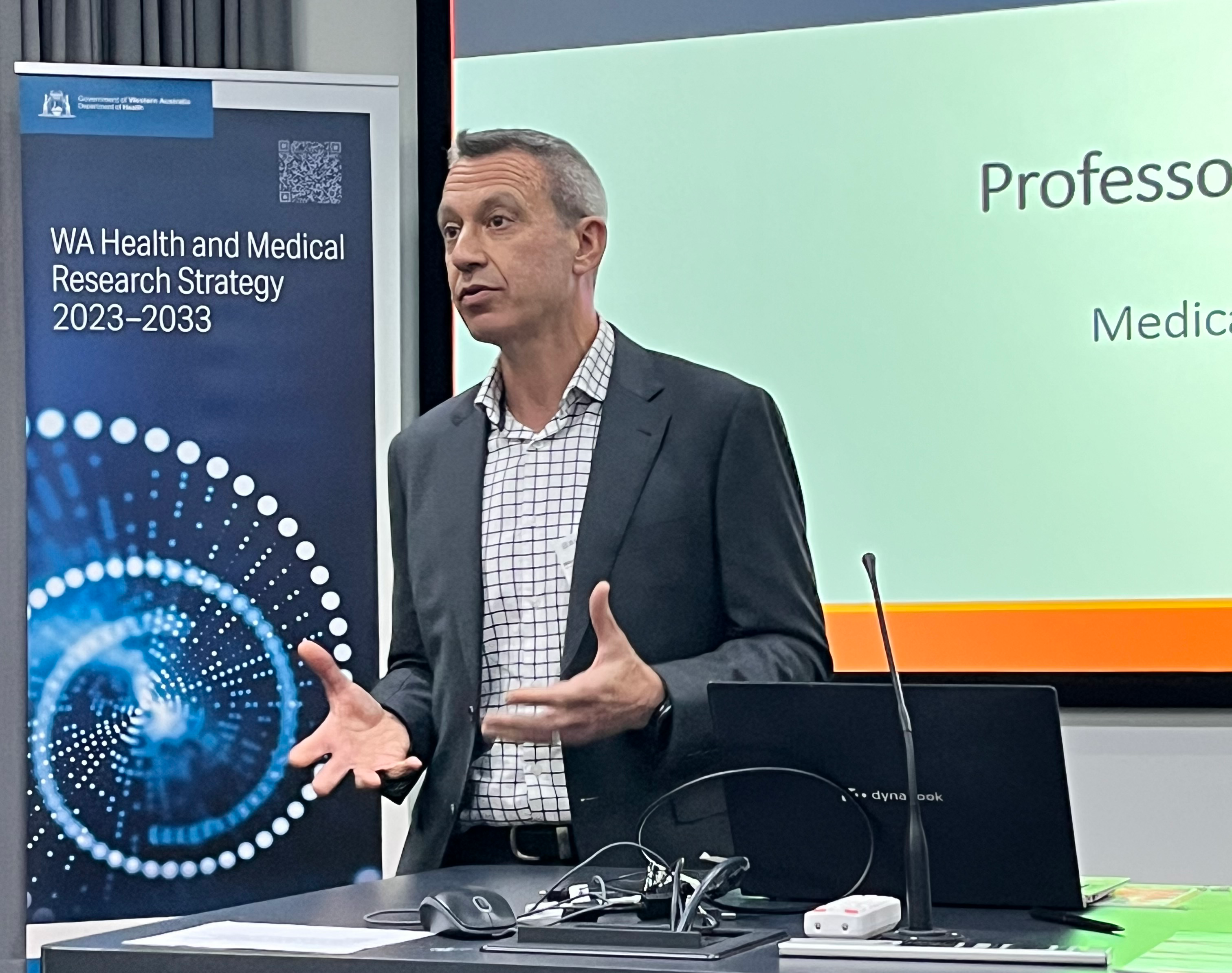
This month the Office of Medical Research and Innovation (OMRI) hosted the second instalment of its Speaker Series, featuring medical ethics expert Professor Nikolajs Zeps, who led a thought-provoking discussion on the evolving role of ethics in medical research, and its importance in building trust, improving research practice and high-quality research.
OMRI Executive Director Stacey Waters opened the hybrid session, which brought together a diverse mix of researchers, clinicians and sector stakeholders to consider how ethical practice can strengthen research quality, foster trust and support better outcomes across Western Australia.
Professor Zeps challenged the growing perceptions of ethics as a procedural “tick-box” exercise, arguing instead that ethical practice must be embedded in the behaviour and decision-making of researchers. He emphasised that ethics is not something achieved through approval processes, but something demonstrated through everyday actions, particularly in how researchers engage with participants, manage data, and respond to uncertainty. Central to this was the importance of trust, transparency and communication, with ethics viewed as a continuous responsibility rather than one-off milestone.
Drawing on extensive experience across research, governance and policy, Professor Zeps highlighted the need to rethink how ethical systems work in practice. He described how unnecessary administrative burden, duplication of review processes and outdated assumptions can detract from meaningful ethical oversight, often without improving participant safety or research quality. He advocated for more proportionate, streamlined approaches, underpinned by strong research design, clear communication and a focus on outcomes that genuinely benefit patients.
The discussion also underscored the critical role of consumer and community engagement in shaping ethical research. Professor Zeps emphasised that involving participants in the design of studies from consent processes to information materials can improve both trust and effectiveness. He reinforced the importance of designing research that is inclusive and accessible, noting that ethical practice extends beyond compliance to ensuring equitable participation and addressing barriers faced by diverse and underserved populations.
The event also featured a lively Q&A, where attendees explored practical challenges in applying ethical principles across research settings. Discussions focused on building trust between researchers and ethics committees, improving research design as foundation of ethical practice, addressing barriers to participation, particularly for underserved communities. Professor Zeps highlighted the importance of ongoing dialogue, consumer engagement and a willingness to challenge assumptions to strengthen ethical frameworks.
The event concluded, announcing upcoming opportunities, including Future Health Research and Innovation (FHRI) Fund Open Day which will be held on 4 June 2026, where new funding programs will be launched, including the announcement of the recipient of the Spotlight on Rheumatic Heart Disease.
The OMRI Speaker Series will continue across the year, bringing leading voices from research and innovation community, addressing topics shaped by sector priorities.